 Legal tech · Web archiving · Self-hosted
Webichive
Web evidence you can stand behind.
- RFC 3161Qualified timestamp on every crawl
- DE · ENInterface and full-text search
- Write-onceEvidence storage with legal holds
Overview
When a website is evidence, a screenshot isn’t enough. Webichive captures entire sites as they were on a given day, seals the result so any later change is detectable, and keeps it all inside the customer’s own infrastructure.
Challenge
Law firms and compliance teams are asked to prove what a page said on a particular date. Screenshots are easy to dispute, hosted archives mean handing sensitive material to a third party, and European customers need German-language tooling, GDPR-ready retention and a clear chain of custody.
Solution
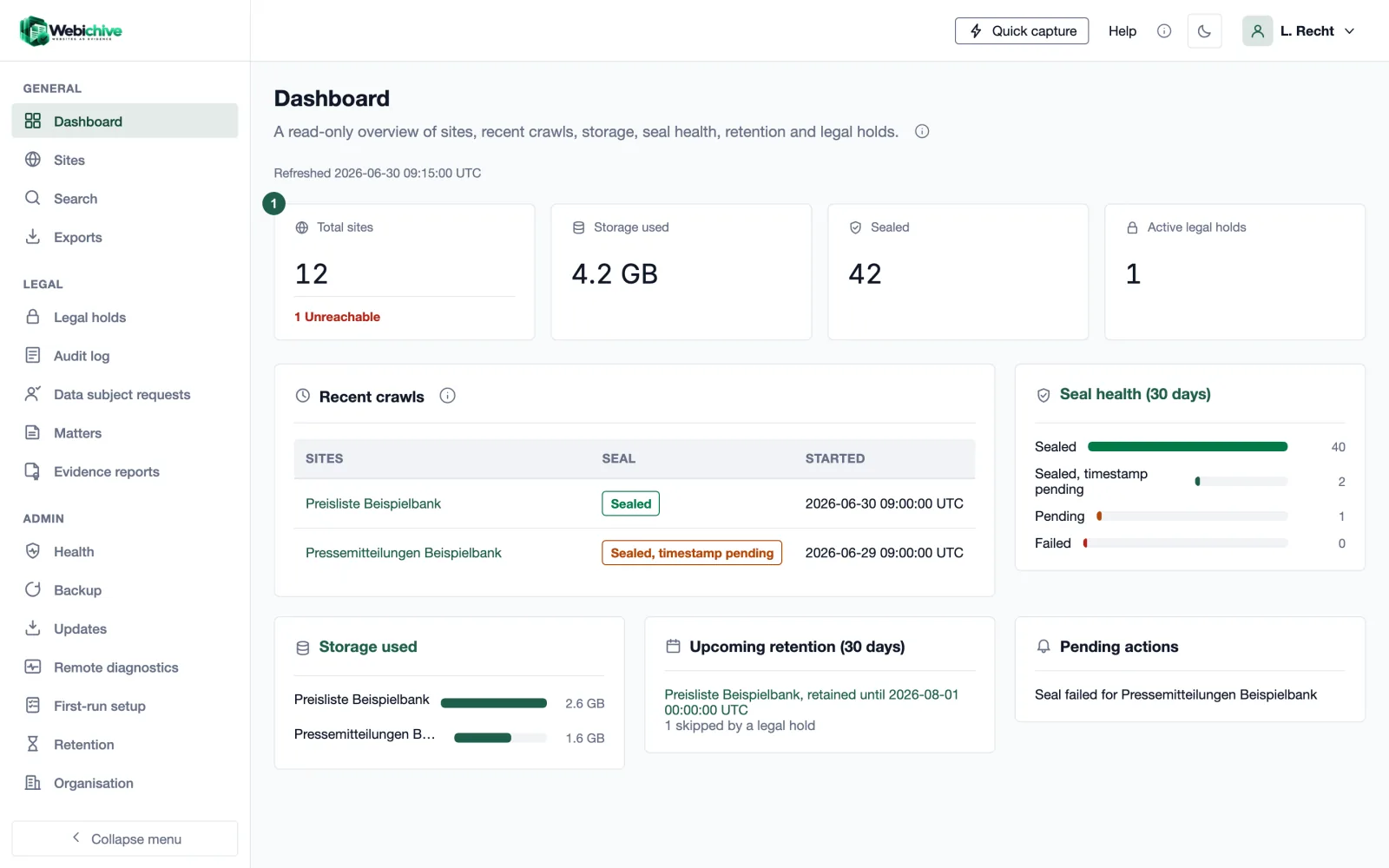
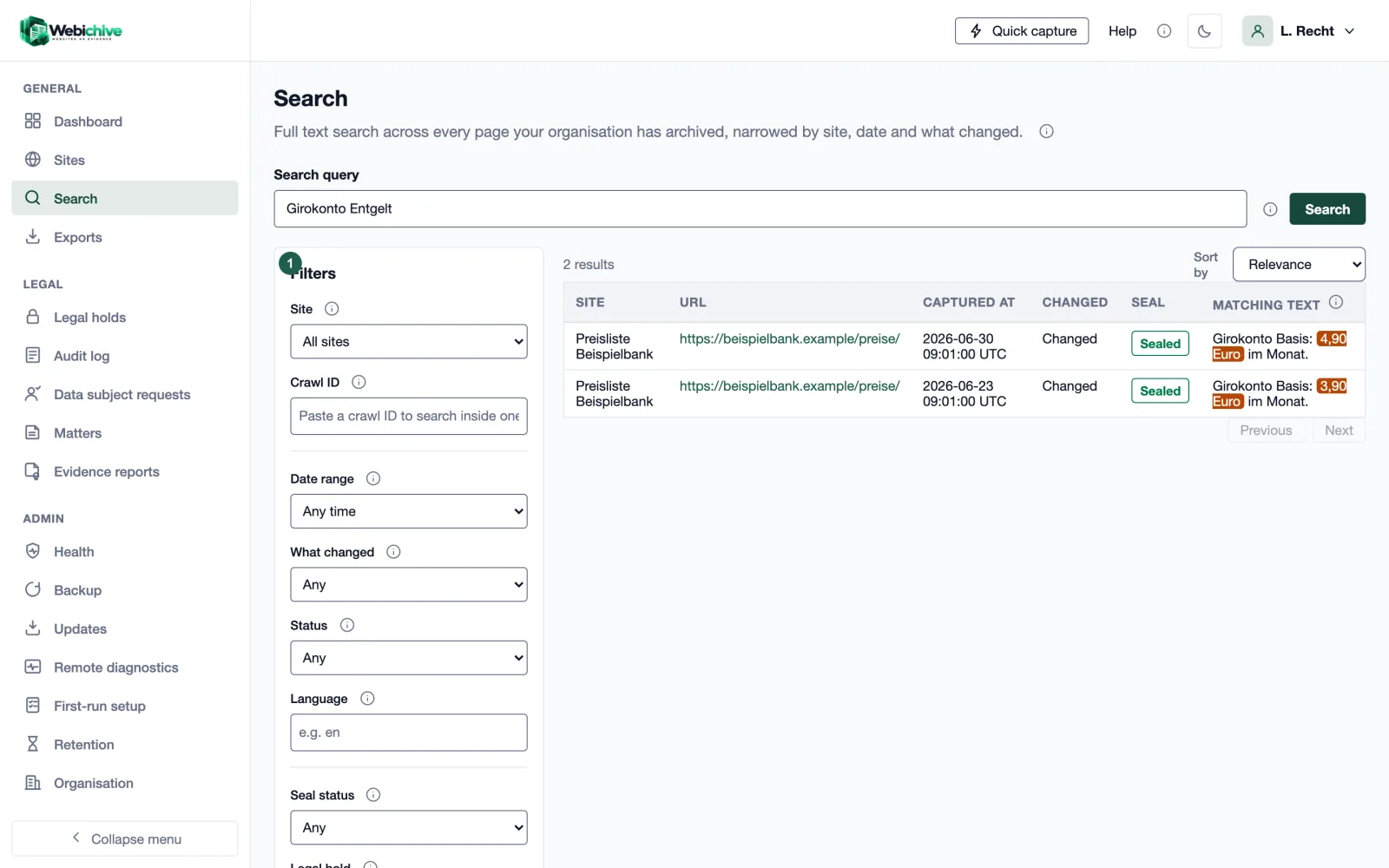
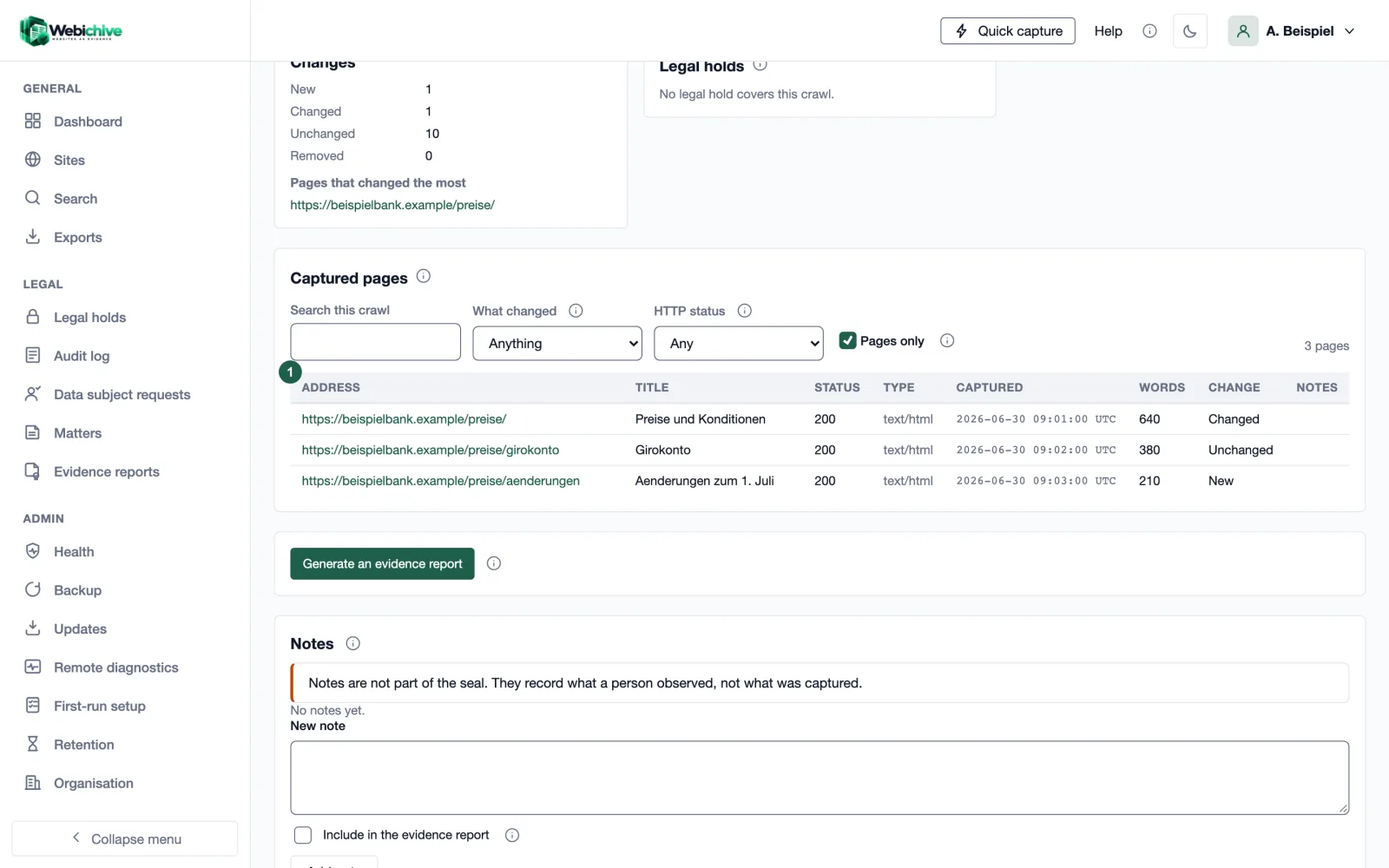
We designed Webichive as a stack the customer runs themselves. It crawls full sites and stores every page with dated full-page screenshots and extracted text, then seals each crawl with SHA-256 hashes, a Merkle root and a qualified timestamp. Everything lands in write-once storage with legal holds, retention rules and a hash-chained audit log. Search works in German and English, and one click produces an evidence report.
Product
- 01Whole-site crawls with dated screenshots and extracted text
- 02SHA-256, Merkle root and a qualified RFC 3161 timestamp on every crawl
- 03Write-once storage with legal holds and retention rules
- 04Full-text search in German and English
- 05Evidence reports, case folders and data subject requests
- 06Runs fully inside the customer’s infrastructure, air-gapped if needed
Technology
- Go
- Next.js
- TypeScript
- PostgreSQL
- MinIO
- Docker
System architecture
01Clients
- Web panel
- Evidence reports
02API
- Go API
- SSO and MFA
03Services
- Orchestrator
- Sandboxed crawler
- Text extraction
04Data
- PostgreSQL
- Write-once object storage
Outcome
Built so a team can show what a site said on a given day, prove it hasn’t been altered, and hand the evidence to counsel or a court, without sending a byte to someone else’s cloud.